We offer a wide range of products at Mojoprint, produced using a variety of printing methods. This is our guide to the most common print methods used in commercial printing today.
Offset printing
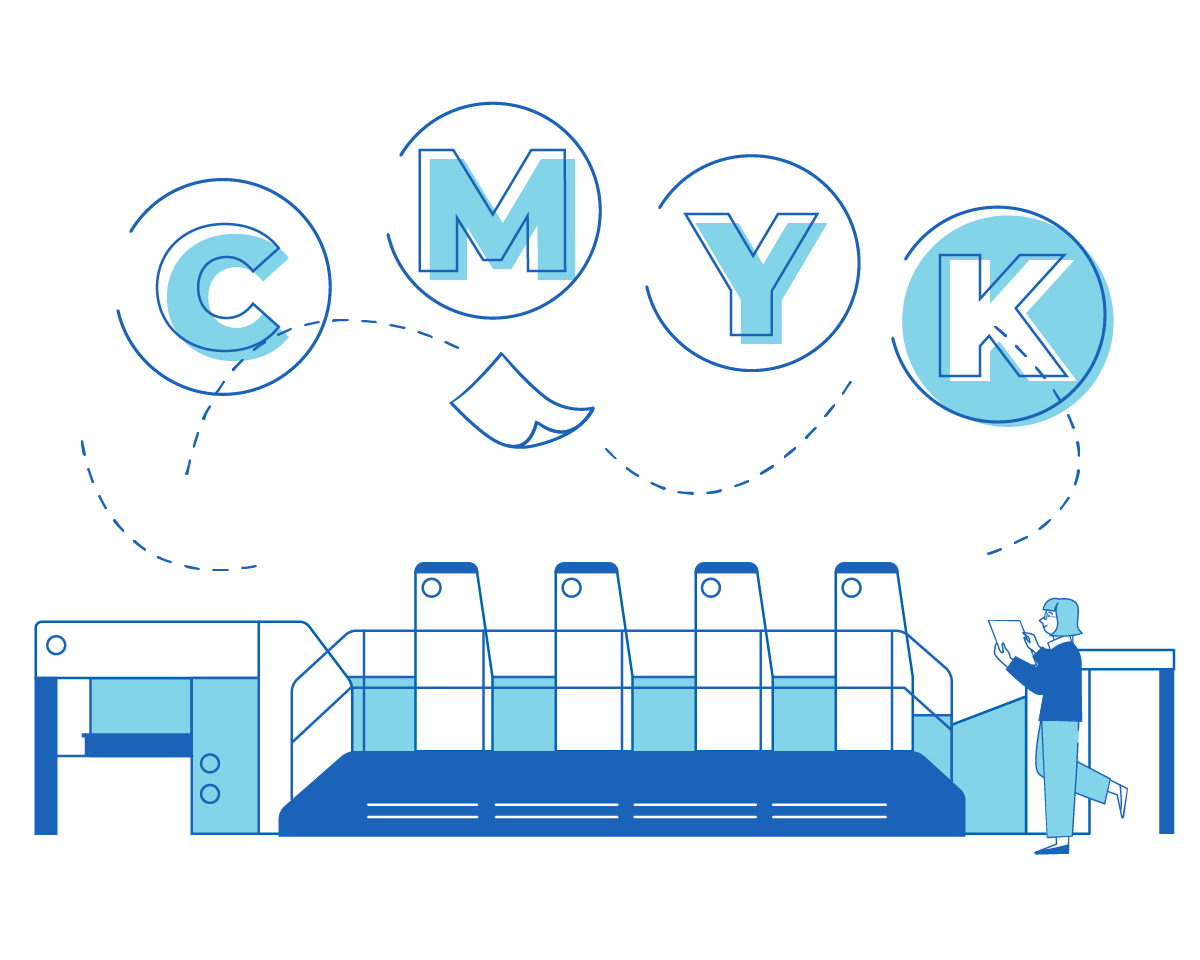
Offset printing is the traditional method of commercial printing. Large format paper is fed into enormous printing presses either as sheets (sheet-feed), or as a huge continuous roll (web-feed), and is capable of printing 1000s of copies per hour. Most flyers, brochures, and magazines are printed using offset printing since it offers an economical option for large volume printing. To keep costs as low as possible, multiple jobs are often 'ganged' together and later cut by commercial guillotine into separate jobs. Offset printing first requires metal plates to be made for each of the CMYK colors in the artwork to be printed, so it is uneconomical for small print runs.
Mojoprint offers offset printing for flyers, postcards, brochures, and business cards.
On-demand digital printing
On-demand or simply 'digital' printing uses either laser, or inkjet technology and is geared towards short print runs. It requires no plates and uses machines with a much smaller footprint.
On-demand laser printing
For short run jobs (typically less than 300 copies), printing digitally using toner-based printing is more economical. Think of them as very large industrial laser printers. The quality of on-demand printers has improved so much that they are now usually on a par with offset printing quality - with the highest spec machines referred to as digital offset. Each job is run separately with on-demand printing, allowing for a greater range of papers to be used. The most advanced printers also offer specialist inks such as clear, white, and fluorescent inks to add special finishes to print jobs.
Mojoprint offers on-demand printing for flyers, postcards, and business cards.
On-demand inkjet printing
The other major method for printing short-run jobs is with inkjet printing technology - using large format or flat bed machines. Posters, banners, textiles, stickers, phone cases etc. are all printed using inkjet printing technology. A variety of inkjet machines exist including dye-sublimation, UV, latex, and standard water or pigment based printers that allow for printing on a wide variety of substrates.
Mojoprint offers inkjet printing for posters, imprinted merch, and stickers.
Other types of printing
Silkscreen printing
A traditional print technique, whereby a design is photochemically transferred to a stretched silk screen mesh and then from the screen to paper and textiles - most commonly t-shirts and other garments. Each color to be printed requires its own screen (much like a plate in offset printing), so usually silkscreen printed items are one, or two color prints only. It is possible to create full color CMYK color separations, but full color shirts are usually printed using DTG (direct to garment), or DTF (direct to film heat transfers) inkjet technology.
Mojoprint offers silkscreen printing for t-shirts, hoodies, and tote bags.
Letterpress printing
Before modern offset printing and the invention of photochemical plate making, printing involved first creating a block arranged of individual metal type pieces. These days the block is created with a photopolymer plate instead but the printing method remains the same. The block or forme is inked and pressed into paper with mechanical presses that results in a subtle depression in the surface - a hand-made finish that holds great appeal to many a graphic designer. Letterpress printing is still used today in certain niche markets for bespoke business cards and wedding invitations etc. but is limited to one or two color printing only.
Mojoprint offers letterpress printing via a custom quote for business cards and other items.
3D printing
The technology has been around for decades, but the process of creating 3d objects by building up layers with various polymer filaments has really come of age. It is now possible to print a 3d object generated from CAD software to a very high level of precision even without the very top end models. This has opened up new markets for 3d printed models beyond engineering and will only continue to develop as the technology improves further. Currently popular consumer uses for 3d printing include ornamental objects such as figurines and hobby models.
Mojoprint does not currently offer 3D printing.

Developed with
 in Osaka by ArticNet